
In short
To follow up with a fitness lead, reply while their goal is still fresh, then send a short sequence that refers to the action they took and asks for one simple next step. Personal trainers should make every message useful, record the next action, and automate routine prospect emails rather than chase every lead manually.
Key takeaways
- ✅ A fitness lead needs a clear next step after every interaction, such as replying with a goal, choosing an option, or booking a conversation.
- ✅ A five-touch sequence can keep a new lead moving without sending the same generic reminder repeatedly.
- ✅ The strongest follow-up messages mention the lead's stated goal, question, or action instead of asking whether they saw the last message.
- ✅ Automated prospect emails can handle routine reminders, while personal replies should handle specific questions, concerns, and buying signals.
Contents
- What does lead follow up mean for a personal trainer?
- What is the best way to follow up with a fitness lead?
- What is a good follow-up message?
- How do you stop follow-up from turning into manual chasing?
- What else do personal trainers ask about lead follow-up?
- What should you do next?
What does lead follow up mean for a personal trainer?
Lead follow-up is the work of continuing a useful conversation after someone shows interest in coaching, an online program, or a trainer's sales page. For a personal trainer, it means helping that person make a decision, not repeatedly asking whether they are still interested.
A new lead may have watched a Reel, downloaded a guide, asked about pricing, visited a sales page, or messaged about a goal such as fat loss, strength, or training around a busy schedule. The next message should connect to that action. A generic reminder makes the lead do the work of remembering why they contacted the trainer.
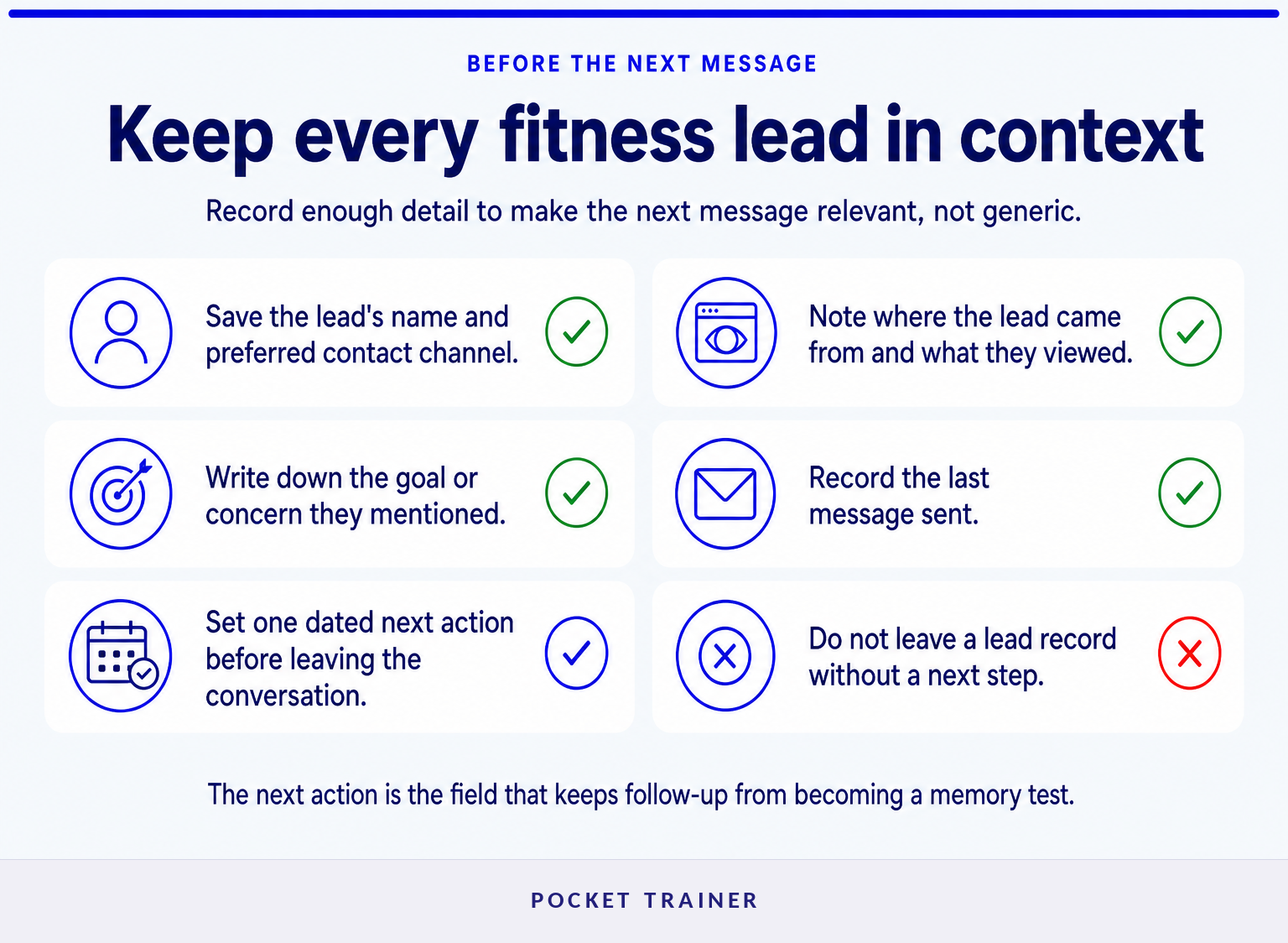
Keep a simple lead record, even if it is only a spreadsheet or notes system. For each person, capture:
- Name and preferred contact channel
- Where the lead came from
- The goal or problem they mentioned
- The last message sent
- The next action and the date it is due
The important field is the last one. If a lead has no named next action, the conversation is easy to forget when client sessions, programming, and content creation take over the day.
A lead is not a task to tick off; it is a conversation that needs context, ownership, and one clear next step.
What is the best way to follow up with a fitness lead?
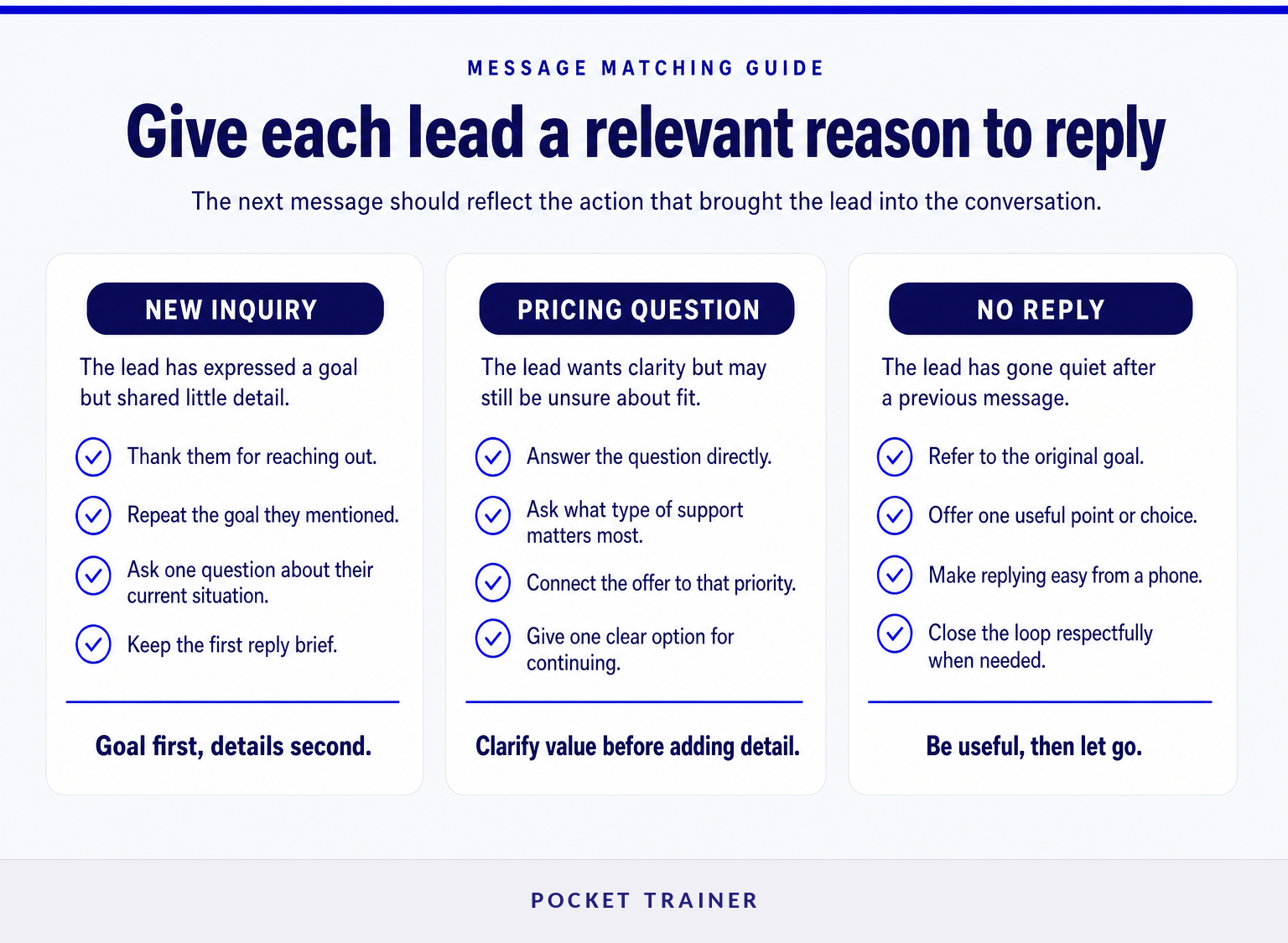
The best way to follow up with a fitness lead is to use a short sequence that becomes more specific as the conversation develops. Start with the goal the person showed interest in, offer one useful point or option, and make replying easy.
A simple five-touch operating model works well when a lead has not already asked for a direct purchase link. The timing is a starting point, not a rule. Shorten it when a lead is actively replying, and pause it when they ask for space or clearly say no.
Touch 1: Reply on the day the lead reaches out
Thank the lead for contacting you, reflect the goal they mentioned, and ask one question that helps you understand fit. Do not send a long sales explanation before you know what they want.
Example:
Thanks for reaching out about online coaching, Jamie. You mentioned wanting to get stronger without spending hours in the gym. How many days a week could you realistically train right now?
Touch 2: Send a useful follow-up the next day
If the person has not replied, offer something that reduces uncertainty. That could be a brief explanation of how online support works, an example of a weekly structure, or a direct answer to a common concern.
Example:
Hi Jamie, a quick note in case the schedule question was the sticking point: many clients start with three structured sessions a week and adjust from there. Would three sessions be realistic for you?
Touch 3: Reconnect around the original goal
A few days later, return to the reason the lead showed interest. Avoid pretending that an unanswered message is a commitment problem. Keep the message short and useful.
Example:
You originally asked about building strength with limited time. If that is still a priority, I can outline what a three-day online plan could look like for your schedule.
Touch 4: Offer a simple decision
A lead may not need more information. They may need a low-friction way to choose between continuing, asking a question, or stepping away.
Example:
Would you prefer that I send the program details, answer one question first, or check back another time?
Touch 5: Close the loop without pressure
If the lead is still quiet, send a final message that leaves the door open and stops the sequence from becoming endless chasing.
Example:
I have not heard back, so I will close this out for now. If getting stronger with a realistic weekly plan becomes a priority again, send me a message and I will be happy to help.
This sequence works because every touch has a purpose. The lead is not being asked to reread the same request for a response.
A good follow-up sequence gives a lead a reason to reply, not another reminder that a trainer is waiting.
What is a good follow-up message?
A good follow-up message is short, specific, and easy to answer from a phone. It should name the lead's goal or prior action, offer something useful, and end with one clear question or choice.
Avoid messages that begin and end with a vague request to reconnect. If a lead has not replied, replace the phrase “just following up” with the real reason for the message.
When someone fills out a coaching inquiry
Hi [Name], thanks for asking about coaching. You said your main goal is [goal]. What has made that goal difficult to stay consistent with so far?
When someone asks about price
Hi [Name], happy to clarify the investment. Before I send the options, are you looking mainly for workouts, nutrition guidance, accountability, or a mix of those?
When someone visits a sales page but does not buy
Hi [Name], if you were looking at the online training details, the easiest place to start is usually choosing the level of support you need. Is your biggest priority structure, accountability, or training around a busy schedule?
When a previous conversation has gone quiet
Hi [Name], you mentioned wanting to [goal] before [event or timeframe]. Is that still something you want support with, or would it be better to reconnect later?
Use the answer to decide what happens next. A lead who replies with a detailed problem needs a personal response. A lead who does not reply after several useful attempts may need to leave the active list for now.
The best follow-up message sounds like a trainer who remembers the person's goal, not a system sending the same reminder to everyone.
How do you stop follow-up from turning into manual chasing?
Stop manual chasing by separating routine follow-up from conversations that need a trainer's judgment. Automate predictable reminders, but personally reply when a lead asks a specific question, explains a barrier, or signals readiness to buy.
This division protects time without making the experience feel impersonal. A trainer should not have to remember every routine reminder after a long day of in-person sessions. But an automated email cannot reliably answer an individual question about injury history, schedule limits, confidence, or the type of support a person wants.
As of October 2026, Pocket Trainer's platform page describes a done-for-you automated prospect email follow-up sequence intended to encourage people who visit a trainer's sales page to become customers. That can cover routine nurture contact while the trainer focuses on replies that need a real conversation.
Use automation for:
- A welcome message after someone visits or inquires about an offer
- A short explanation of what the online program includes
- A reminder that gives the lead one clear option to respond
- A respectful final message when there has been no engagement
Keep personal control over:
- Questions about suitability, goals, and program expectations
- Price conversations that need context
- Leads who are actively replying
- Any promise about results, availability, or individual support
Automated prospect emails reduce routine chasing, but personal trainer judgment is still what turns a real conversation into the right client relationship.
What else do personal trainers ask about lead follow-up?
Personal trainers often need clear language for routine lead conversations because generic sales advice can feel awkward in a coaching business. These answers keep the focus on useful, respectful contact that gives prospective clients an easy decision.
What is the best way to follow up with a lead?
The best way to follow up with a lead is to refer to the goal, question, or action that started the conversation and then ask for one simple next step. For a fitness lead, that might mean asking about available training days, preferred support, or the barrier that has made progress difficult. Avoid repeating generic reminders.
What does lead follow up mean?
Lead follow-up means continuing contact with a person who has shown interest but has not yet become a customer. For a personal trainer, lead follow-up includes answering questions, clarifying the coaching offer, sharing relevant information, and asking for a next step that helps the person decide whether the service fits their goal.
What is a better way of saying follow up?
A better way of saying follow up is to state the actual reason for contacting the person. Try phrases such as “I wanted to answer your question about online coaching,” “I thought this might help with your goal,” or “Would you like me to send the program details?” Specific language sounds more helpful and less automated.
What is a good follow-up message?
A good follow-up message is personal, brief, and easy to answer. Mention what the lead said or did, offer one useful detail, and ask one direct question. For example: “You mentioned wanting to train three days a week. Would you like me to show you how that could work in an online plan?”
Useful follow-up language tells the lead why the message matters and gives them a low-pressure way to respond.
What should you do next?
Start with the leads already in your inbox. Add a next-action date to each active conversation, write one message for each stage of the sequence, and stop sending reminders that do not give the lead a reason to answer.
If the follow-up itself is the bottleneck, explore Pocket Trainer's trainer platform to see how a customizable sales page and automated prospect emails can support an online or hybrid coaching offer. The goal is not to message more people. It is to make every worthwhile lead conversation easier to continue.